
Natural Mothering: What Anthropology Can Teach Us About Raising Children
Modern motherhood can sometimes feel strangely complicated.
We have schedules, sleep programs, feeding charts, parenting books, educational apps, and endless opinions about what babies and children should be doing at every stage. Mothers are often told to encourage independence early, establish strict routines, and measure development according to carefully defined milestones.
Yet human beings raised children for thousands of generations before any of these systems existed.
Anthropology—the study of human beings, cultures, and societies—offers a fascinating perspective on motherhood because it allows us to look beyond the expectations of one particular culture or historical moment. When we examine childhood across human societies, several recurring themes appear.
Babies are held. Children remain close to caregivers. Families depend upon one another. Mothers respond to their babies’ signals. Older siblings and extended family participate in child-rearing. Learning occurs through everyday life.
Natural mothering, viewed through this anthropological lens, does not mean recreating prehistoric life or rejecting modern conveniences. It means asking a simpler question:
What kinds of relationships and environments have human children historically grown within?
Human Babies Are Born Dependent
One of the most important things to understand about human infancy is just how dependent our babies are.
Compared with many other mammals, human newborns can do remarkably little for themselves. They cannot walk, find food, regulate their environment, or protect themselves. Their survival depends completely upon other people.
That dependence is not a defect. It is part of being human.
Because humans develop large and complex brains, much neurological development continues after birth. A baby’s earliest experiences therefore occur within relationships—with mothers, fathers, siblings, grandparents, and other caregivers.
From an anthropological perspective, closeness between infants and caregivers is hardly unusual. For much of human history, leaving a baby alone for long stretches would simply have been impractical.
Babies were carried because families needed to move.
They slept near caregivers because separate nurseries did not exist.
They were fed and comforted frequently because infant care happened alongside ordinary family life.
The expectation that very young babies should quickly become independent is therefore relatively unusual when considered against the enormous span of human history.
Babies Communicate Before They Can Speak
Crying is sometimes treated as behavior that must be corrected. Anthropologically and biologically, however, crying serves a much more basic purpose.
It is communication.
A newborn cannot say:
I’m hungry.
I’m uncomfortable.
I’m frightened.
I need to be held.
So babies communicate through movement, facial expressions, sounds, rooting, fussing, and eventually crying.
Responsive parenting simply recognizes these signals as meaningful.
That does not mean a mother must prevent every cry or instantly solve every problem. No parent can do that. It means approaching a baby’s distress as communication rather than manipulation.
A young infant is not attempting to control the household. She is expressing a need with the limited tools available to her.
Over time, children develop increasingly sophisticated ways of communicating. But their earliest understanding of human relationships begins with a remarkably simple interaction:
I signal, and someone responds.
That repeated experience helps form the foundation of trust.
Humans Were Never Meant to Parent Completely Alone
Perhaps one of the most valuable lessons anthropology offers modern mothers is that child-rearing has rarely been an entirely solitary responsibility.
Anthropologists sometimes use the term alloparenting to describe care provided by people other than a child’s biological parents.
Throughout many cultures, children receive care from grandparents, aunts, uncles, older siblings, cousins, neighbors, and other trusted members of the community.
This cooperative approach to raising children may be deeply connected to human success as a species.
Human children require tremendous amounts of time and energy. A mother who had to obtain food, care for other children, maintain shelter, and protect her family while simultaneously providing constant infant care benefited enormously from the presence of other trustworthy adults.
In other words, the familiar phrase “It takes a village to raise a child” describes something that has characterized many human communities.
Modern motherhood can feel overwhelming partly because that village has become smaller.
Families may live hundreds of miles from grandparents. Mothers may spend much of the day alone with young children. Neighbors may barely know one another. Extended families who once shared responsibilities now live in different cities or states.
When motherhood feels difficult under those circumstances, the problem may not simply be that an individual mother needs to become more organized.
Sometimes she needs more people.
Building relationships with grandparents, trusted friends, church communities, homeschooling groups, neighbors, and other families can therefore be more than a pleasant addition to family life.
It can restore something humans have relied upon for generations: community.
Carrying and Physical Closeness Are Deeply Human
Baby carriers sometimes appear to be a modern parenting trend, but carrying babies is anything but new.
Across cultures and throughout history, mothers have used cloth, baskets, wraps, slings, and other methods to keep babies close while continuing daily activities.
For a baby, being carried provides warmth, movement, touch, and access to a caregiver’s voice and face.
For a mother, carrying can allow care and ordinary life to happen together.
This reflects a broader anthropological pattern: historically, children were often integrated into adult life rather than placed within entirely separate environments designed exclusively for children.
A baby might accompany her mother while food was prepared.
A toddler might observe older family members working.
Children might play near adults rather than spending the majority of their day in age-segregated activities.
This kind of proximity gave children enormous opportunities to observe how their culture worked.
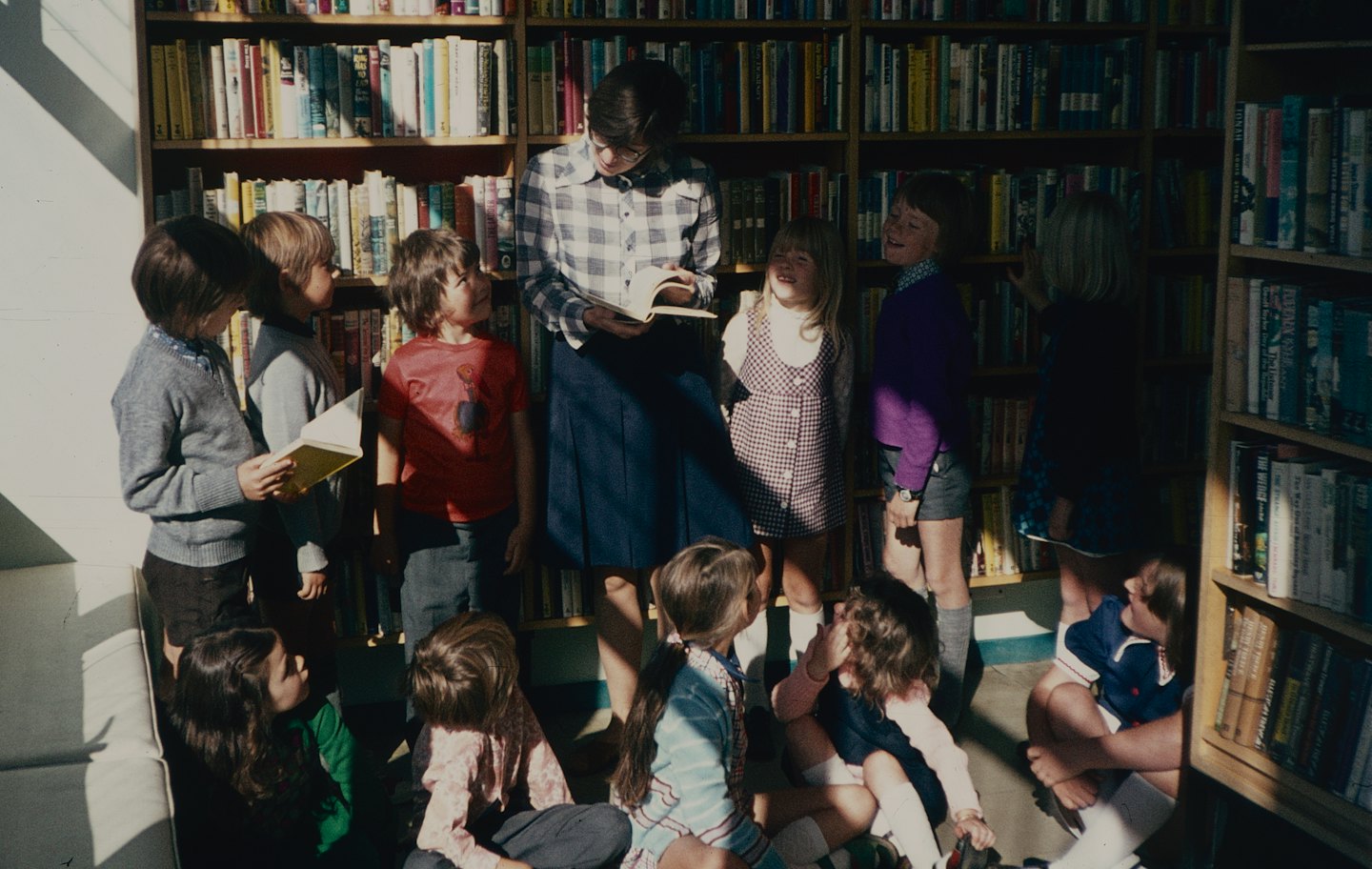
Children Learn by Participating in Life
One of the most fascinating differences between cultures involves how children learn.
Modern Western education often assumes that learning happens primarily when an adult deliberately teaches information to a child.
But across many societies, children learn extensively through observation, imitation, participation, and practice.
A child watches someone prepare food.
Eventually, she helps.
A child watches an older sibling care for an animal.
Eventually, she participates.
A child hears songs and stories repeatedly.
Eventually, she remembers and repeats them.
Learning becomes woven into ordinary life.
For homeschooling families especially, this anthropological perspective can be wonderfully freeing.
Not every educational experience needs to resemble a classroom lesson.
Cooking teaches mathematics, sequencing, chemistry, and practical skills.
Gardening introduces biology, weather, patience, and responsibility.
Family stories teach history.
Nature walks encourage observation.
Reading aloud develops vocabulary, imagination, and cultural knowledge.
Helping younger siblings builds responsibility and empathy.
Children are constantly learning because human beings are naturally designed to learn from the people around them.
Motherhood Has Always Included Flexibility
Anthropology also gives us an important warning: there has never been one single parenting method practiced by every human society.
Cultures differ enormously.
Infant sleeping arrangements vary.
Breastfeeding practices vary.
Weaning ages vary.
Family structures vary.
Expectations for independence vary.
The responsibilities given to children vary.
Ideas about discipline vary.
Even what people consider an ideal childhood differs from one society to another.
Therefore, “natural mothering” should never become another rigid checklist mothers feel pressured to follow.
Anthropology does not tell us that every mother must breastfeed for a particular number of years, co-sleep, babywear constantly, homeschool, or reject modern technology.
Instead, it reminds us of something broader.
Human beings are remarkably adaptable, but certain themes repeatedly appear in healthy human communities:
relationship, responsiveness, physical presence, cooperation, belonging, participation, and connection.
The details can look different in every family.
Independence Usually Grows From Dependence
Modern parents are often encouraged to produce independence as quickly as possible.
But childhood development contains an apparent paradox.
Children become independent only after spending years being dependent.
A baby who needs to be held will eventually walk away from her mother.
A toddler who repeatedly asks for help will eventually insist, “I can do it myself.”
A child who sleeps near her parents will eventually want privacy.
A teenager begins making decisions apart from the family.
Healthy development gradually expands a child’s world.
Anthropologically, children have often remained embedded within family and community networks even as their responsibilities increased. Independence did not necessarily mean isolation.
Perhaps the goal, then, is not simply independence.
It is competence within connection.
We want children who can think, work, solve problems, and make decisions while still understanding that human beings need one another.
Natural Mothering Is Not About Perfection
There is a danger whenever we talk about natural parenting.
Mothers already carry enough guilt.
Natural mothering should never become another standard by which women measure themselves and conclude that they have failed.
You can use a stroller and still practice responsive parenting.
You can use formula and have a deeply bonded baby.
You can work outside the home and maintain a secure relationship with your children.
You can use childcare.
You can enjoy modern conveniences.
You can need time alone.
Human motherhood has always involved adaptation to circumstances.
The deeper anthropological principle is not about reproducing one particular lifestyle.
It is about recognizing the kind of creature a human child is.
A child is profoundly social.
A child seeks attachment.
A child learns through relationships.
A child benefits from belonging to a family and a community.
A child gradually develops independence through years of guidance and support.
And mothers were never intended to carry the entire responsibility of raising children without help.
Returning to What Matters
Perhaps natural mothering is ultimately less about adding something new to our lives and more about remembering something old.
Hold the baby.
Answer the cry.
Read the story again.
Let the toddler help.
Eat together.
Walk outside.
Call Grandma.
Know your neighbors.
Let siblings learn from one another.
Invite children into ordinary life.
Give them roots before expecting them to grow wings.
Anthropology reveals extraordinary diversity in the way human beings raise children. But beneath that diversity lies a remarkably consistent truth:
Human childhood happens within relationships.
We may live in a world very different from that of our ancestors, but our children are still human children.
And sometimes the most natural thing a mother can offer is also the simplest:
her presence, her responsiveness, and a loving community in which her child knows she belongs.
5 Ways to Practice Natural Mothering in Modern Life
Natural mothering does not require giving up modern life. It is less about following a strict parenting philosophy and more about creating a home where connection, responsiveness, participation, and family relationships remain central.
Here are five simple ways to bring those principles into everyday life.
1. Respond to Your Child Before Reaching for a Method
Parenting advice can be helpful, but no book, schedule, or method knows your child as well as you do.
Before worrying about whether you are creating a “bad habit,” pay attention to what your child may actually be communicating.
A crying baby may need comfort.
A clingy toddler may need reassurance.
A frustrated child may need help understanding an emotion before being corrected for behavior.
Responsive parenting does not mean giving children everything they want. It means recognizing that behavior often communicates something deeper.
Start with the relationship, then decide how to respond.
2. Keep Young Children Close to Everyday Family Life
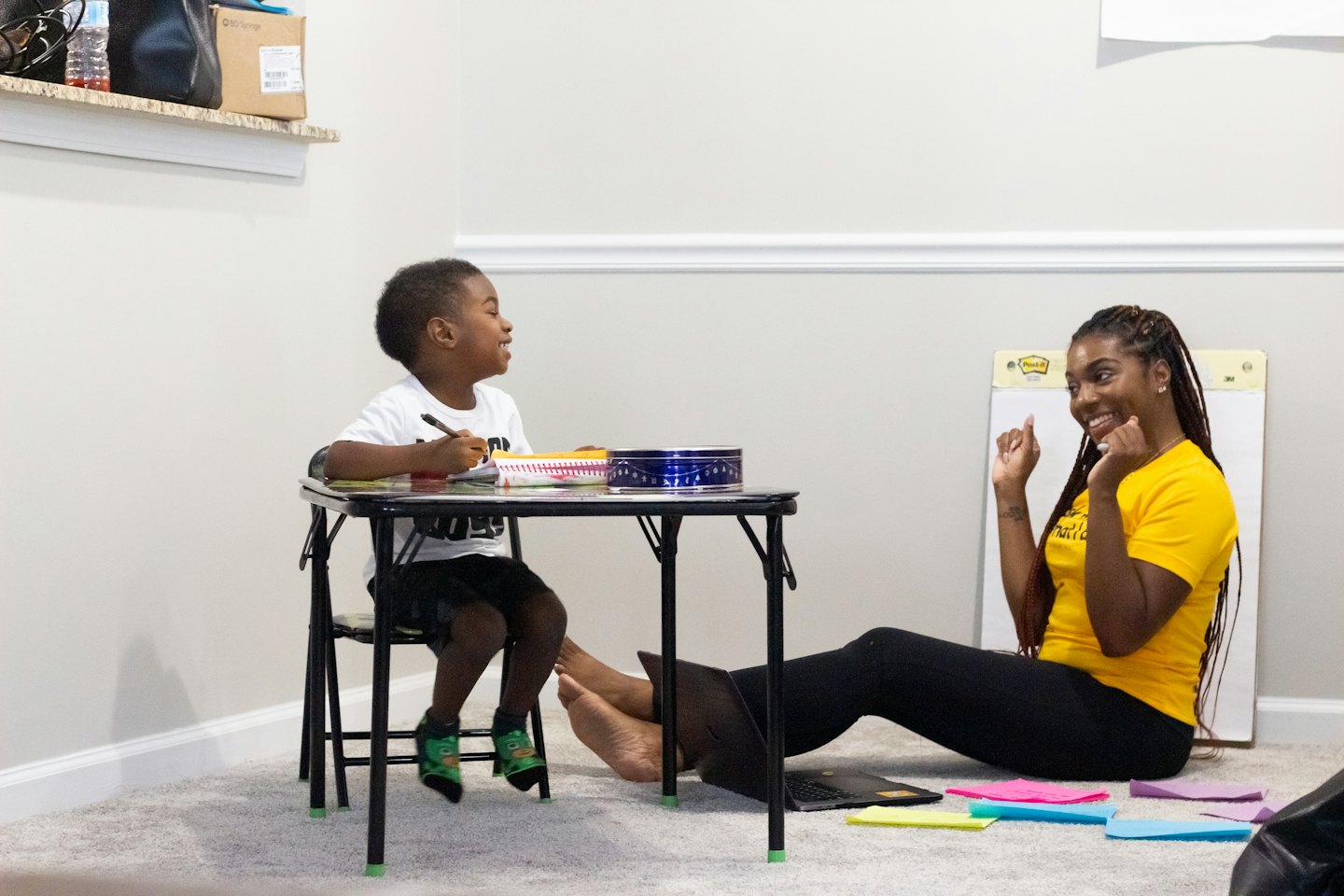
Children do not always need elaborate activities to learn.
Allow them to participate in ordinary life.
Let them sit nearby while you cook. Give them a small towel while you clean. Let them help carry groceries, water plants, sort laundry, feed pets, or prepare the dinner table.
These moments may seem insignificant, but they teach children that they are contributing members of the family.
They also provide opportunities for language, mathematics, observation, responsibility, motor development, and problem-solving without turning every experience into a formal lesson.
Instead of constantly asking, “How can I entertain my child?” try asking:
“How can I include my child?”
3. Create Your Own Village
Modern families often live without the support networks that were common throughout much of human history.
We may not be able to recreate the extended communities of the past, but we can intentionally build relationships around our families.
That might include:
- spending more time with grandparents and relatives
- becoming involved in a church or faith community
- joining a homeschool or play group
- developing friendships with other mothers
- getting to know trustworthy neighbors
- allowing older and younger children to spend time together
- trading occasional childcare with trusted families
Community benefits children, but mothers need it too.
You were never meant to carry every responsibility alone.
4. Protect Unstructured Time
Children today can easily move from one structured activity to another from morning until bedtime.
Lessons, sports, clubs, screens, appointments, and schoolwork all have their place, but children also need time when nobody is telling them exactly what to do.
Unstructured time encourages imagination, experimentation, movement, boredom, creativity, and independent problem-solving.
This can be as simple as an afternoon outside, a basket of art supplies, building with blocks, playing with siblings, exploring the backyard, or reading quietly.
Children often create some of their richest learning experiences when adults stop organizing every minute for them.
5. Choose Connection Over Perfection
Perhaps the most important practice is also the easiest to forget.
Your children do not need a perfect mother.
They need a relationship with you.
There will be rushed mornings.
There will be convenience meals.
There will be too much screen time some days.
You will occasionally become impatient.
Plans will fall apart.
Natural mothering is not about creating a flawless childhood. Human families have always experienced stress, uncertainty, mistakes, and change.
What matters is returning to connection.
Apologize when necessary.
Sit together.
Read another story.
Take a walk.
Ask your child what she is thinking.
Put down the phone for a few minutes and listen.
Start again tomorrow.
A Gentle Reminder
You do not need to completely redesign your family life to practice natural mothering.
Begin with small things.
More conversation.
More shared meals.
More time outside.
More participation in everyday family work.
More affection.
More patience with dependence.
More community.
And perhaps a little less pressure to make childhood perfect.
The anthropological lesson is surprisingly reassuring: human children have been growing, learning, and thriving within families for thousands of years.
They do not need perfection.
They need people.
And above all, they need to know that they belong.
Testimonials
This section briefly summarizes client feedback and experiences.

This is where a customer testimonial should go. Feel free to include whatever content you have.

Person 1
Job Title, Company Name
This is where a customer testimonial should go. Feel free to include whatever content you have.

Person 2
Job Title, Company Name

Begin Your Natural Mothering Journey Today
Discover the joys of attachment parenting, homeschooling, and holistic family living. Join our community for warmth, compassion, and daily inspiration tailored for your family.