
Learning to write the alphabet is a big milestone for young children, but handwriting practice does not need to mean pages and pages of repetitive copying.
For preschool, Pre-K, and kindergarten children, a little intentional practice can go a long way.
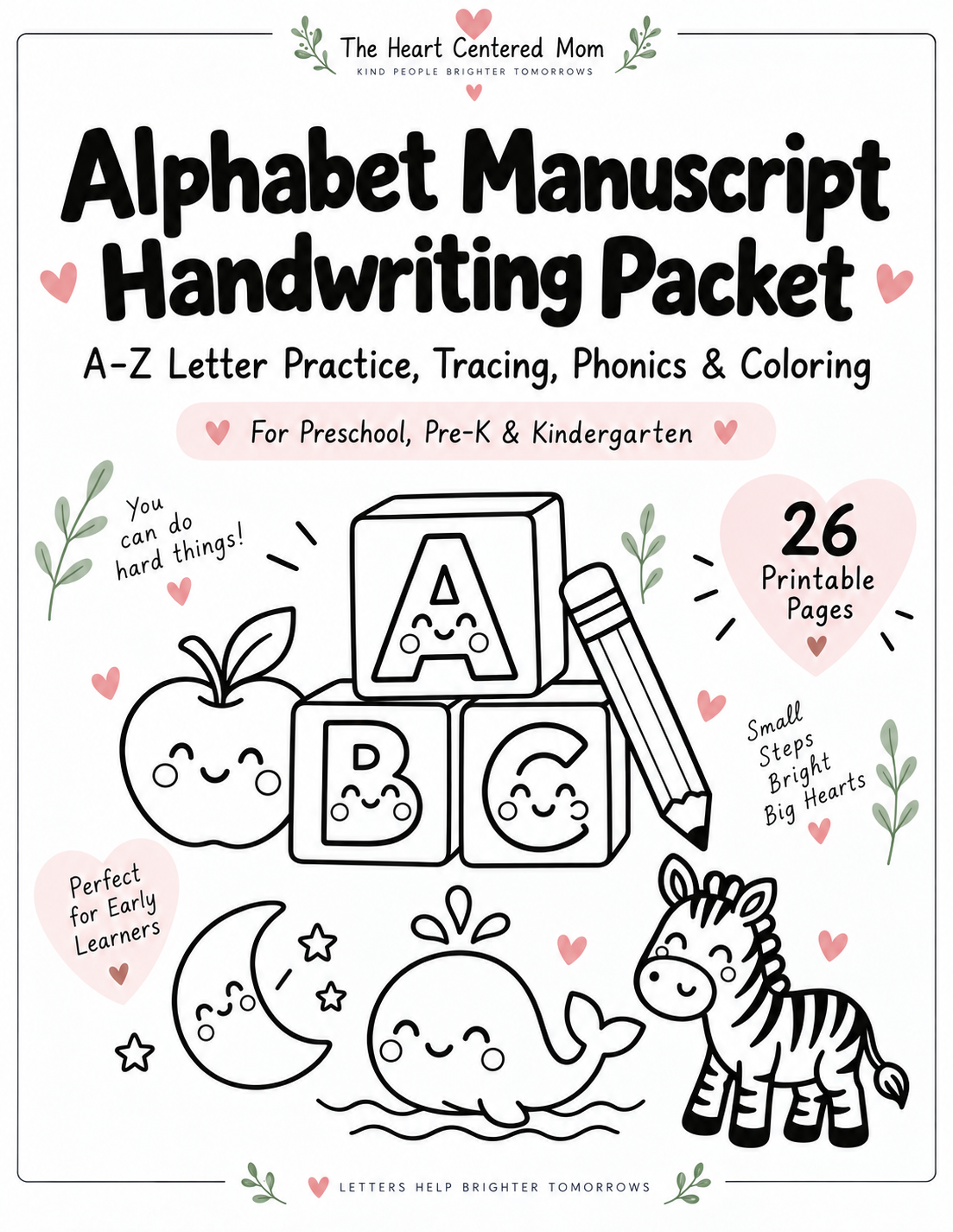
That is why I created the Alphabet Manuscript Handwriting Packet: an A–Z printable designed to help children practice letter formation, beginning sounds, tracing, independent writing, and simple phonics all on the same page.
The goal is not perfect handwriting.
The goal is helping a child become comfortable putting pencil to paper.
What Is Manuscript Handwriting?
Manuscript handwriting is the simple printed style of writing children usually learn before cursive.
Instead of connecting letters together, children form each letter individually.
For example:
A a
B b
C c
Young learners are developing several skills at the same time when they begin handwriting. They are learning what a letter looks like, how it is formed, where it belongs on a writing line, and what sound it represents.
That is a lot for little hands and growing minds.
It is completely reasonable for handwriting to take time.
Start With Seeing the Letter
Before asking a child to write a letter repeatedly, give them time to really look at it.
Each page of our manuscript handwriting packet begins with a large uppercase and lowercase letter along with a simple picture connected to that letter.
For example:
A is for apple.
B is for ball.
C is for cat.
The large coloring picture gives children another way to interact with the page before they begin writing.
You might ask:
“What letter do you see?”
“What sound does it make?”
“What picture starts with that sound?”
Young children often learn best when several little pieces of information begin connecting together.
Trace Before Writing Independently
Tracing can be a helpful bridge between recognizing a letter and forming it independently.
The handwriting pages include a clear manuscript example followed by faded tracing letters.
Have your child slowly trace over each letter rather than racing through the row.
You can say something as simple as:
“Follow the shape.”
Once they feel comfortable tracing, they can move to the empty handwriting lines underneath.
Our packet includes three large handwriting rows with a dotted middle guideline so children have plenty of room to practice without the page feeling crowded.
Keep Handwriting Practice Short
More handwriting is not always better handwriting.
Especially with younger children, I would rather have a child carefully practice five letters than become frustrated while trying to finish an entire page.
You can divide one worksheet over several days.
For example:
Day 1: Color the picture and talk about the letter.
Day 2: Trace the uppercase and lowercase letters.
Day 3: Practice writing the letter independently.
Day 4: Complete the phonics and word-writing section.
There is no rule saying an alphabet worksheet has to be completed in one sitting.
Connect Handwriting With Phonics
Writing becomes much more meaningful when letters are connected to actual words.
That is why each worksheet includes a Phonics Practice section underneath the handwriting activity.
Children can say the word, trace it, and then try copying it independently.
For the letter B, for example, children might practice words such as:
ball
bear
bee
The goal is to begin making the connection:
letter → sound → word
There is also a simple picture activity that asks children to identify which pictures begin with the featured letter sound.
It turns handwriting practice into a little phonics lesson too.
Let Children Color
Coloring is not just something to add after the “real work” is finished.
For young children, coloring gives them another opportunity to slow down, observe the picture, talk about vocabulary, and use the page with less pressure.
You can also use the coloring picture to start a conversation.
If the page says M is for moon, you might ask:
“Have you seen the moon outside?”
“What does the moon look like?”
“What other words can you think of that begin with M?”
Suddenly one printable handwriting page can turn into a short language lesson.
What If My Child’s Letters Are Messy?
Let them be messy.
Early handwriting is supposed to look like early handwriting.
Letters may be oversized. Lowercase letters may float above the line. A child may reverse a letter or forget where to begin.
The page does not need to look perfect to represent meaningful progress.
Instead of correcting every little mistake, look for one thing to encourage and one thing to practice.
For example:
“You remembered to start at the top. Now let’s try making the lowercase letter stay under the middle line.”
Small corrections are much easier for children to process than a long list of things they did wrong.
Try an A–Z Handwriting Routine
You can use the packet in several different ways.
Work through one letter each day, choose two or three letters each week, match the pages to the letters your child is currently learning, or simply keep the packet available for extra practice.
There is no need to rush from A to Z.
If your child needs another day with the letter M, take another day.
If they already know S confidently, move on.
Homeschooling gives us the freedom to work at the pace of the actual child sitting in front of us.
Alphabet Manuscript Handwriting Packet
I created the Alphabet Manuscript Handwriting Packet to give families one simple printable resource for early handwriting and phonics practice.
The packet includes 26 A–Z printable letter worksheets featuring:
- uppercase and lowercase manuscript practice
- faded tracing letters
- large handwriting lines with middle guidelines
- simple coloring pictures
- beginning-sound phonics activities
- trace-and-copy vocabulary words
- independent writing space
- one page for every letter of the alphabet
It is designed for preschool, Pre-K, kindergarten, homeschool morning work, handwriting centers, and extra practice at home.
A Gentle Reminder
Children do not need perfect handwriting at five years old.
They need opportunities to practice.
They need pencils that occasionally wander outside the lines, letters that get erased and tried again, and adults who recognize that learning happens little by little.
Small steps really do build big skills.
And sometimes one peaceful page at the kitchen table is enough for today
Leave a Reply